Sunday, 12 September 2010

Creation - a Celebration


The book of these wonderful works can be purchased from Amazon price £28.50.

Saturday, 11 September 2010

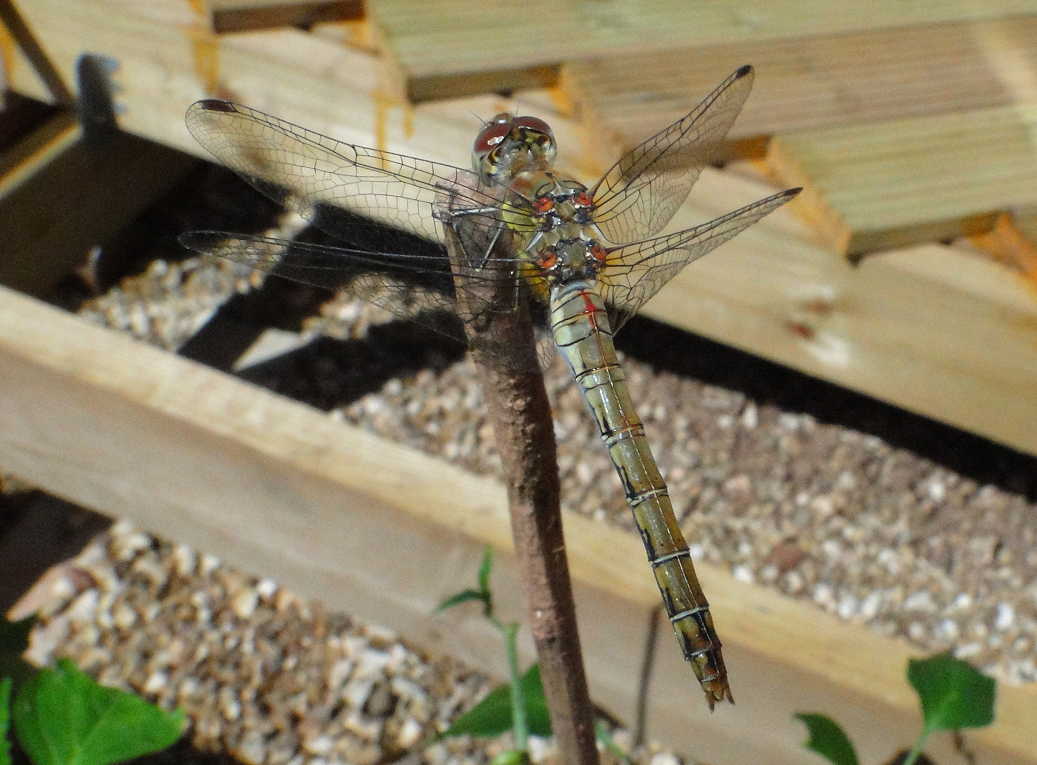
Frog End - Dragonflies


Common Darter


Migrant Hawker

Justin Knowles


Justin Knowles, artist and teacher, was born in Exeter in 1935 and was one of the most innovative artists of his generation. Hn the 1960s and 70s he established himself as a major artist but in 1973, just as his future as a major modern British abstract artist seemed assured, his uninsured studio caught fire in mysterious circumstances. It cost him most of his finished work, his work in progress and all his materials. What Knowles called "the silent time" began. After his 1973 show at Waddington Galleries, it would be 24 years before he exhibited again. The Devon home had eventually to be sold and Knowles returned to Islington. He began teaching in Exeter, commuting twice a week, and turned his attention to publishing and other businesses. In 1996 he began exhibiting again and in 2002 he was commissioned to make this cross and figure for Exeter Cathedral.

Exeter Cathedral - Martyrs' Pulpit


The pulpit was designed by Sir George Gilbert Scott who carried out restoration work at the cathedral in the 1870s. 


It depicts the martyrdom od Saints Alban and Boniface and of Bishop John Coleridge Patteson, a Devonian who became the first Bishop of Melanesia in the South Pacific and was martyred in 1871.  The pulpit was erected in 1877. 

Friday, 10 September 2010

Exeter Green Fair - September 2010


Killerton House - Laundry


A box mangle.


An ordinary mangle.

Scrubbing board.


Dolly peg.


Dolly tub.


Drying racks.


Irons.


This small iron was used for collars, I think.


I don't know what this unusual shaped iron was for.


This iron would be filled with coals to keep it warm.

For the interesting story of a was day in the Potteries using some of thes implements see this site.

William - Frog End's cat


Thursday, 9 September 2010

Killerton House


The reception room of the house is laid out as it might have been during the War when the house was occupied by two evacuated schools.  His how the school secretary's desk might have appeared.


One of a number of second world war posters to be seen.


 Sir Thomas Dyke Acland commissioned portraits of the members of  Grillion's Club, a London dining club  which he helped to found in 1813.  They include Lord Shaftesbury, Lord John Russell, and W E Gladstone.


The upstairs of the house is given over to a fashion through the ages exhibition.  These silk brocade shoes with matching pattens were from between 1720 and 1740.  Such shoes were often made from the same silk as the dress and were fitted with buckles varying from steel to silver set with diamonds.


Killerton House had been in the Acland family since the early seventeenth century and when the Civil War broke out John Acland declared himself for the King, even tough the rest of the Exeter area was strongly parliamentarian.  For this the king rewarded him with a Baronetcy in 1644.


The 'Great Sir Thomas', Sir Thomas Dyke Acland, the Tenth Baronet painted in 1818.  He did much to improve the grounds and house.


The study.


Sir Francis Nicholson (14 November 1753 – 6 March 1844) was a British artist. He worked in watercolour and oil, and is mainly known as a landscape artist. This self-portrait was painted when he was 89 years old.